Off-Campus Student Resources
Resources and support for St. Thomas students living off campus—including commuting, renter education, neighborhood living, student-parent resources and more.
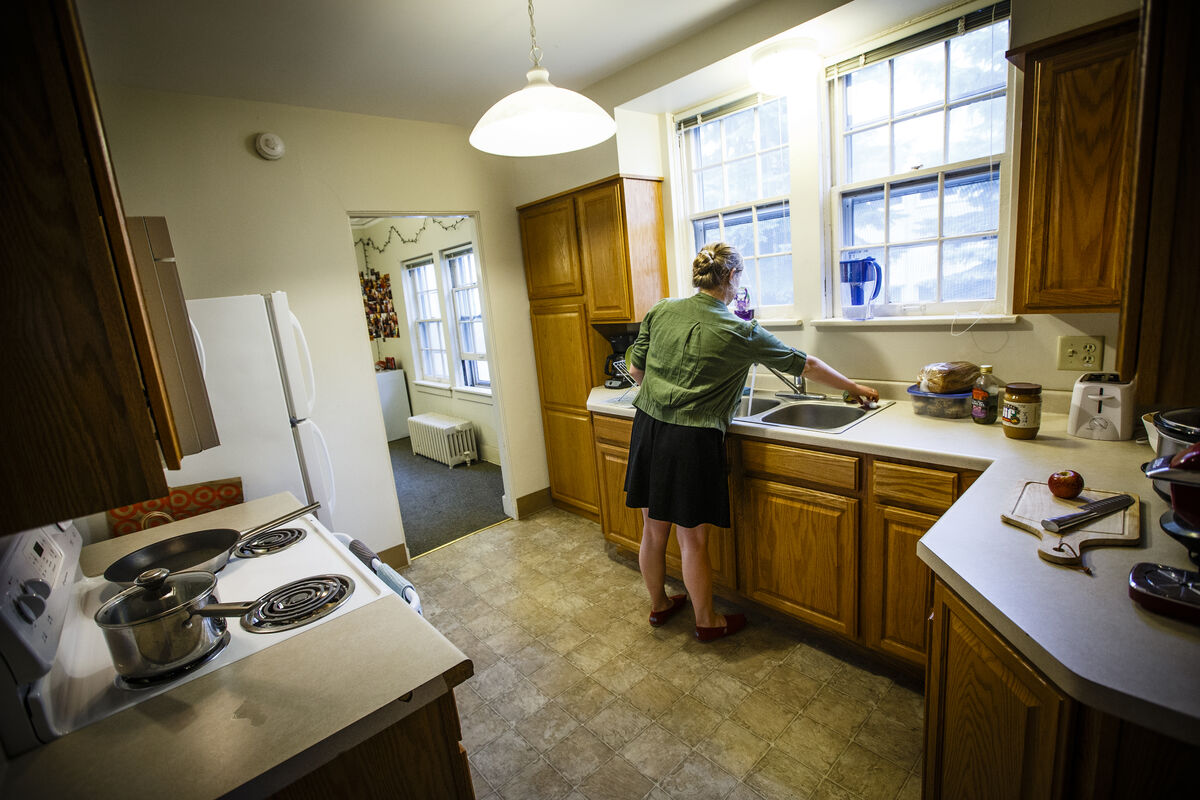
Resources and support for St. Thomas students living off campus—including commuting, renter education, neighborhood living, student-parent resources and more.
The St. Thomas Off-Campus Student Life (OCSL) team supports undergraduate students who live off campus — whether you live at home, commute to campus, or rent housing near St. Thomas. These resources are designed to help you stay connected, succeed academically, and navigate life beyond campus housing.
If you are looking for an apartment, house, or roommate near campus, visit our Off-Campus Housing Near St. Thomas page for listings, search tips, renter education, and important disclosures.
Whether you live across the street or across the Twin Cities, we offer a variety of programs and services for students living off campus.
We also have programs that serve specific populations of off-campus students, this includes students who are parents.
Helping students manage their relationships with homeowners and landlords, understanding community norms around our campus, and problem-solving challenges they may encounter are some of the areas where staff can assist.
Contact us by sending an email to offcampus@stthomas.edu.
There are a number of ways to get to St. Thomas's Minneapolis and St. Paul campuses: Maps and Directions for St. Paul and Minneapolis Campuses
Moving between the St. Paul and Minneapolis campus is easy with the shuttle bus that runs between the two locations.
Many of our students, faculty, and staff live in the neighborhoods around our St. Paul campus and find walking to our campus the easiest way to get around.
Campus Safety Escort: Public Safety will send an officer to walk with you anywhere on campus (including a few blocks off campus). Call Public Safety at (651) 962-5100 for a campus safety escort.
Trails and Paths: St. Paul and Ramsey County have a number of pedestrian walking paths and trails. Also, feel free to check out MapMyWalk.com as an online resource for planning your walking commute.
Riding your bicycle is an excellent way to get to and from campus. It is inexpensive, and environmentally friendly; plus, a great form of exercise.
Bicycle Parking: There are a number of bicycle racks and bike storage/cages on campus available for student use. Be sure to only lock your bike to a bike rack.
Bike Routes: Minnesota has miles of paved bicycle trails. Plan your bicycle commute with the St. Paul Bikeways map (PDF) or your favorite map app.
Learn more about Bicycle Parking, Repair, and Wash Stations on Campus
Motorcycles and mopeds/scooters require permits to park on campus and must be parked only in designated areas.
Learn more about parking for motorcycles, mopeds, and scooters
Public transit is the most inexpensive way of getting to St. Thomas. In addition to being more affordable than parking on campus, buses also save students from the hassle of getting to campus in rush hour traffic. St. Thomas offers discounted bus passes for students.
St. Thomas provides multiple parking options for commuter students on both the St. Paul and Minneapolis campuses. Like most urban schools, the University of St. Thomas has an ongoing concern with parking. More than two-thirds of our students, faculty, and staff commute to the university.
Parking enforcement is managed through license plate recognition. Permit holders must have an accurate license plate number linked to their permit.
Purchasing a permit does not guarantee a parking space, and a lack of parking is not a valid excuse for any violation of parking regulations.
Public Safety at St. Thomas provides assistance with:
Get more details about Public Safety's Vehicle Assistance services or call Public Safety at (651) 962-5100.
Students living near campus are part of the surrounding neighborhoods, and St. Thomas provides resources to help support positive, respectful community relationships.
More than 2,000 St. Thomas undergraduates live within a mile of campus in the Student Housing Overlay District. You can view a map of the Student Housing Overlay District online.
St. Thomas students are expected to be responsible neighbors. Students must comply with University policies like the Student Conduct Code, local laws, and community standards while living off campus.
St. Thomas expects students to foster positive relationships with their neighbors.
Being a good neighbor includes maintaining your property and keeping shared spaces clean and safe.
The City of Saint Paul has a Property Code Enforcement which requires residents and property owners to maintain their properties in a manner that protects public health, safety, and neighborhood quality.
Key expectations include:
St. Thomas wants to prepare students for the responsibilities and realities of living off campus in a family-oriented neighborhood. A core function of Off-Campus Student Life (OCSL) is to educate students about their rights and responsibilities living off-campus, particularly in the Merriam Park and Macalester-Groveland neighborhoods around St. Thomas' St. Paul campus.
Renter 101 is an introductory overview as you begin thinking about living off campus. Students are encouraged to watch Renter 101 before starting their off-campus housing search.
The Student Tenant Education Program (STEP) is designed to provide students with fundamental resources and knowledge about living off-campus. Students will learn about living off-campus responsibly, maintaining their property, developing good relationships with permanent residents, and becoming part of the community around campus.
STEP covers:
Know local parking rules to avoid citations or towing and keep streets accessible for residents and emergency vehicles.
This small but growing program encourages our neighborhood students to donate and recycle goods before spring move-out, whether it's usable furniture for Bridging, blankets and towels for Emotional Rescue in Hastings, Minnesota, or discardable electronics that can be recycled at Repowered (formerly Tech Dump).
St. Paul is divided into 17 district councils that foster citizen input and make recommendations to the City Council. Our St. Paul campus straddles two of those councils -- Union Park District Council and Macalester-Groveland Community Council -- and we encourage and enable our students to become involved.
St. Thomas also co-leads the city-chartered West Summit Neighborhood Advisory Committee (WSNAC), made up of university administrators and neighbor representatives from four different neighborhood groups.
It is our hope to provide you with easy access to information that will help support you in your experiences both in and out of the classroom at St. Thomas.
University offices and departments linked to this site offer specific, helpful information for you. If you are still unable to find the information you need or would like to discuss a specific issue not listed here, please contact offcampus@stthomas.edu.
A staff member in Off-Campus Student Life can provide a student with useful information about off-campus housing options around the area. Unfortunately, there are no on-campus housing options for students who have dependent children living with them.
Please call (651) 962-6138 for additional information.
Off-Campus Student Life is located on the second floor of the Anderson Student Center, ASC 218.
The Financial Aid Office can provide a student with useful information.
A financial aid counselor can help students with financial aid information and resources to finance a St. Thomas education. Please call 651-962-6550 to set up an appointment with a counselor. Financial Aid is located on the first floor of Murray-Herrick Campus Center (MHC).
The Business Office can provide a student with useful information concerning tuition payments.
A counselor can help students plan methods of payment to finance a St. Thomas education. Please call 651-962-6600 to set up an appointment with a counselor. The Business Office is located on the first floor of Murray-Herrick Campus Center (MHC).
It is important that parents understand the attendance policies on their course syllabi.
If a parent needs to miss a class due to their child being ill, the parent should contact their professor immediately to notify the professor of the reason for their absence.
Several convenient diaper-changing stations and lactation rooms exist on the St. Paul and Minneapolis Campuses.
The Post-Secondary Child Care Grant Program helps low-income undergraduate students who have young children pay for child care while the student attends classes. Talk to your Financial Aid Counselor to learn more about this grant. You can also read about the Postsecondary Child Care Grant on the Minnesota Office of Higher Education site.
Academic Counseling can provide students with useful information concerning scheduling and course emphasis. An academic counselor can help students plan classes around their needs. It is helpful to make a degree plan and plan several semesters ahead because not all classes are offered each semester.
Call (651) 962-6300 to set up an appointment with a counselor. Academic Counseling is located in the Murray-Herrick Campus Center, room 110.
The Center for Well-Being is an integrated health and well-being center, partnering the services of:
Call (651) 962-6750 for additional information. Health Services is located at 35 S. Finn Street (between Summit and Grand Avenues).
The Center for Student Achievement is designed to serve as an online hub to connect students to University of St. Thomas resources aimed at helping students explore options and opportunities, provide support, and enrich their academic experiences.
Other resources include the Center for Writing, the Mathematics Resource Center (MARC), Disability Resources, and Academic Counseling.
Off-Campus Student Life (OCSL), a program of the Dean of Students Office, provides hospitality, information, programs, resources, and services to all students with an emphasis on commuters, non-traditional students, and students who live in the immediate neighborhood. With the goal of providing a full campus experience for both undergraduate and graduate students, our services foster community, academic and personal success, and opportunities for cultural awareness and leadership development.
Off-Campus Student Resources are coordinated by the Off-Campus Student Life team:
Ana Theisen, Ed.D.
Assistant Dean of Students
aztheisen@stthomas.edu
Anderson Student Center, ASC 241
(651) 962-6659
Responsible for the management of programs in the Dean of Students office, including Off-Campus Student Life, Orientation, and First-Gen Tommies.